

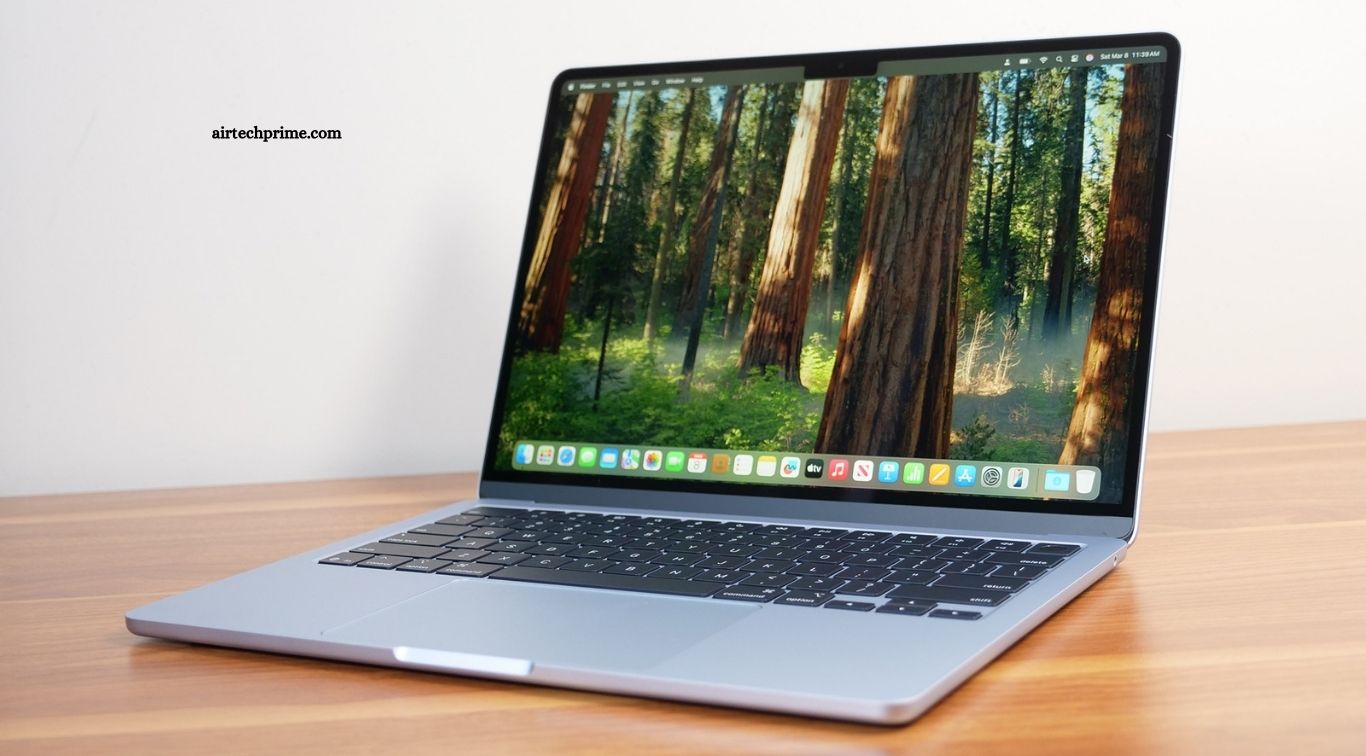
Laptop technology continues moving forward at an impressive pace, with 2026 bringing major improvements in artificial intelligence, battery efficiency, display quality, portability, and processing power. Leading manufacturers are introducing machines designed for students, business professionals, creators, developers, and gamers who expect stronger performance without sacrificing mobility.
Recent launches also show a major shift toward AI-powered computing. New processors from Intel, Qualcomm, AMD, and NVIDIA are helping manufacturers deliver smarter laptops capable of handling AI workloads directly on the device. From affordable everyday notebooks to advanced creator machines, the latest laptop launches provide more choices across almost every price and performance category.
Read More: Smartwatch Buying Guide for Beginners
Dell XPS 13 Brings Premium Design at a Lower Price
The latest Dell XPS 13 represents an important change for Dell’s popular premium laptop family. Rather than concentrating exclusively on expensive configurations, Dell has introduced a more accessible starting point while maintaining the sleek design associated with XPS devices.
The new XPS 13 features a CNC-machined aluminum chassis, 2.5K touchscreen, a backlit keyboard, modern wireless connectivity, and a lightweight body. Dell claims up to 17 hours of streaming battery life, making the laptop particularly attractive for professionals and students who frequently work away from a charger.
With pricing starting around $699 in the United States, the refreshed XPS 13 brings premium laptop characteristics into a more competitive segment.
Dell 14S Targets Students and Everyday Users
Dell has also expanded its affordable lineup with the new Dell 14S, unveiled around IFA 2026. This model focuses primarily on students and everyday users who want modern hardware without paying flagship laptop prices.
Its aluminum construction gives the machine a more premium appearance than many conventional entry-level notebooks. Buyers can expect several colorful finishes alongside display choices reaching 2.8K resolution and a 120Hz refresh rate.
Intel Core Series 3 processors power the laptop, while connectivity includes USB-C and full-size HDMI. The Dell 14S is expected to reach the U.S. market during fall 2026, with final pricing depending on configuration and region.
Lenovo IdeaPad Vibe Adds More Personality
Lenovo’s IdeaPad Vibe brings a different approach to the mainstream productivity market. Instead of offering only traditional black, gray, or silver designs, Lenovo has introduced several colorful finishes aimed at buyers who want their laptop to feel more personal.
The IdeaPad Vibe comes in 14-inch and 15-inch versions, with AMD and Qualcomm processor options planned first and Intel-powered versions following later. Selected configurations also offer OLED touchscreen displays.
Storage can reach 1TB, while certain AMD configurations support up to 32GB of upgradeable memory. Qualcomm versions can offer up to 24GB of RAM. USB-C, USB-A, HDMI, a headphone jack, and microSD connectivity make the laptop practical for everyday productivity.
HP OmniBook Ultra 16 Pushes Local AI Performance
HP’s latest OmniBook Ultra 16 represents the rapidly growing premium AI laptop category. Announced in September 2026, the machine uses NVIDIA’s RTX Spark platform to deliver advanced local artificial intelligence capabilities.
Instead of depending entirely on cloud-based AI services, compatible workloads can run directly on the computer. This approach can benefit developers, creators, AI enthusiasts, and professionals handling demanding projects.
HP is positioning the OmniBook Ultra 16 around advanced content creation, personal AI agents, development, and high-performance workflows. It demonstrates how AI hardware is becoming a central part of premium laptop design rather than simply an additional software feature.
HP OmniBook X 14 Combines AI Power With Portability
Users wanting similar AI capabilities inside a smaller machine can consider the newly announced HP OmniBook X 14. HP designed this laptop around portability while incorporating NVIDIA RTX Spark technology.
The smaller form factor makes it suitable for creators and professionals who regularly travel or move between workspaces. Local AI processing can also reduce dependence on internet-based services for compatible applications and workloads.
Together, the OmniBook Ultra 16 and OmniBook X 14 show HP’s growing focus on AI-first premium computing.
ASUS ProArt P16 and P14 Focus on Creators
ASUS has expanded its ProArt family with the new ProArt P16 and ProArt P14. These laptops target content creators, developers, designers, and professionals working with demanding AI-assisted applications.
Both models incorporate NVIDIA RTX Spark technology, providing powerful local AI processing alongside capabilities designed for professional creative workflows.
These machines are particularly interesting for users working with video production, graphics, AI development, and other demanding creative applications. ASUS is clearly positioning its newest ProArt models as portable workstations built around the growing role of personal AI.
ASUS ROG Strix SCAR 18 Targets Serious Gamers
Gaming laptops continue receiving significant upgrades, and the 2026 ASUS ROG Strix SCAR 18 stands among the year’s most powerful announcements.
Selected configurations support an Intel Core Ultra 9 290HX Plus processor alongside an NVIDIA GeForce RTX 5090 Laptop GPU. The laptop can deliver up to 320W total system power, emphasizing maximum gaming performance rather than extreme portability.
Another major attraction is its 18-inch 4K 240Hz Mini LED display. High resolution combined with a fast refresh rate makes the machine suitable for premium gaming and demanding content creation.
Microsoft Surface Laptop Ultra Moves Toward AI Workstations
Microsoft’s Surface Laptop Ultra is another major development in the premium laptop market. Designed around NVIDIA RTX Spark, it focuses heavily on creators, developers, and professionals running demanding local AI workloads.
The machine supports up to 128GB of unified memory and features a 15-inch mini-LED PixelSense Ultra touchscreen. NVIDIA Blackwell RTX graphics and CUDA support expand its potential for development, rendering, AI processing, and other computational workloads.
Microsoft describes it as its most powerful Surface Laptop, showing how traditional thin notebooks are evolving toward portable AI workstations.
Acer Aspire Go 15 Makes Modern Computing More Affordable
Premium AI machines receive plenty of attention, but affordable laptops remain essential. Acer’s Aspire Go 15 demonstrates how newer processor technology is moving into lower-cost systems.
The laptop became one of the first machines announced with Qualcomm’s Snapdragon C platform, developed for entry-level computing. Qualcomm emphasizes responsive everyday performance, efficient operation, and long battery life.
Such hardware can appeal to students, families, and users mainly handling web browsing, online learning, documents, video calls, and everyday productivity.
Acer Swift Spin 14 AI Expands Convertible Laptop Choices
Acer has also strengthened its premium portable lineup with the Swift Spin 14 AI. The convertible design allows users to move between conventional laptop and tablet-style configurations.
Different versions use Intel Core Ultra Series 3 or Qualcomm Snapdragon X2 processors, combining modern AI acceleration with flexible hardware.
A convertible machine can be particularly useful for students, designers, presenters, and mobile professionals who want touchscreen functionality without carrying a separate tablet.
MSI Prestige N16 Flip AI+ Brings AI Power to a 2-in-1
MSI’s Prestige N16 Flip AI+ combines high-end computing with a flexible 2-in-1 form factor. The machine uses NVIDIA RTX Spark and features a 16-inch UHD+ Tandem OLED display.
Its display technology is designed to deliver strong brightness while improving efficiency and panel longevity. A 360-degree convertible design allows the laptop to operate in laptop, tablet, tent, and presentation positions.
Such flexibility makes the Prestige N16 Flip AI+ particularly appealing to professionals who combine productivity, presentations, creative work, and AI-assisted tasks.
AI PCs Are Becoming the Biggest Laptop Trend
Artificial intelligence has moved from being a marketing addition to becoming an important hardware consideration. Manufacturers are increasingly including dedicated neural processing capabilities, powerful GPUs, and specialized AI platforms inside new laptops.
NVIDIA’s RTX Spark represents one of the biggest developments of 2026. Microsoft, ASUS, Dell, HP, Lenovo, and MSI are among the manufacturers preparing laptops based on the platform. NVIDIA says the technology can provide up to one petaflop of AI performance and support as much as 128GB of unified memory in compatible systems.
Intel is simultaneously expanding Core Series 3 hardware for mainstream thin-and-light machines. Intel highlighted improved battery efficiency, integrated AI capabilities, and modern connectivity as key advantages of the platform.
Battery Life Remains a Major Priority
Raw performance is no longer the only factor defining a good laptop. Battery efficiency has become equally important, especially for students, travelers, remote workers, and business professionals.
Modern processors increasingly balance performance with lower power consumption. Intel has highlighted up to 20 hours of battery life improvements in certain new Core Series 3 laptop designs, while Qualcomm continues emphasizing all-day battery operation across Snapdragon-powered systems. Actual battery performance will naturally depend on individual laptop configurations and usage.
Better Displays Are Reaching More Laptop Categories
Another noticeable trend involves display technology. High-refresh-rate panels, OLED screens, Mini LED displays, touchscreens, and higher resolutions are appearing across a broader selection of laptops.
Premium gaming machines now combine 4K resolution with extremely high refresh rates, while productivity laptops increasingly provide OLED touchscreen options. Better screens improve movies and gaming, but they also benefit photo editing, video production, reading, multitasking, and everyday office work.
What Should You Look for When Buying a New Laptop?
Choosing among the latest laptop launches should begin with your actual workload. A student mainly working with documents, research, video meetings, and browsing may gain little from an expensive gaming GPU. An affordable Snapdragon or mainstream Intel laptop could provide better value and battery life.
Creators should prioritize processor performance, memory capacity, display quality, storage speed, and GPU capabilities. Gamers should pay close attention to GPU performance, cooling, refresh rate, and power limits.
AI developers and professionals running local models have another consideration: dedicated AI hardware and available memory. New RTX Spark laptops demonstrate how memory capacity and AI compute performance are becoming increasingly important specifications for advanced professional machines.
Should You Upgrade to a 2026 Laptop?
Upgrading makes the most sense when your existing laptop struggles with daily applications, has poor battery life, lacks required connectivity, or cannot support your current professional workload.
Users already owning a relatively recent laptop may not need an immediate replacement. However, buyers using much older systems can gain substantial improvements in efficiency, display quality, wireless connectivity, portability, security, and AI acceleration.
Rather than purchasing simply because a laptop is new, compare its capabilities against your actual requirements and expected usage period.
Frequently Asked Questions
What are the latest laptop launches in 2026?
Major launches include new Dell XPS, HP OmniBook, ASUS ProArt, Acer Swift, Lenovo IdeaPad, and Microsoft Surface models.
Which latest laptop is best for gaming?
ASUS ROG Strix SCAR 18 is a powerful option for high-end gaming and demanding graphics workloads.
Are new AI laptops worth buying?
Yes, AI laptops can provide faster local AI processing, improved efficiency, and better support for emerging applications.
Which laptop is best for students?
Affordable Dell, Acer, and Lenovo models offer solid performance, portability, and battery life for everyday study.
What should I check before buying a new laptop?
Consider processor performance, RAM, storage, battery life, display quality, portability, graphics, and overall price.
Are 2026 laptops better for battery life?
Many newer laptops deliver improved battery efficiency through modern Intel, AMD, and Qualcomm processors.
Conclusion
Latest laptop launches show that 2026 is becoming an important year for personal computing. Dell is making premium XPS hardware more accessible, Lenovo is adding more personality to mainstream notebooks, Acer and Qualcomm are expanding affordable computing, while ASUS and MSI continue improving creator and gaming machines. The biggest transformation, however, comes from AI-focused hardware.

1 Comment
Pingback: Best Gaming Gadgets for an Enhanced Experience - AirTechPrime